 jane
Operating a cannabis dispensary in Canada requires specialized insurance coverage that addresses both standard business risks and cannabis-specific liabilities. At minimum, you need general liability insurance to protect against customer injuries and property damage, product liability coverage for contamination or mislabeling claims, and commercial property insurance for your inventory and equipment. Most provinces also mandate specific coverage types as part of licensing requirements, though exact thresholds vary by jurisdiction.
The challenge isn’t just knowing what coverage you need. Finding insurers willing to underwrite cannabis businesses remains difficult in 2026, despite federal legalization. Many traditional carriers still exclude cannabis operations from their policies, citing federal-provincial regulatory complexity and evolving case law around product liability. This leaves dispensary owners navigating a smaller pool of specialized insurers who understand the sector’s unique risk profile.
Beyond mandatory coverage, smart operators layer additional protection against industry-specific exposures. Cyber liability insurance protects customer data and payment processing systems, while employment practices liability shields against wrongful termination or discrimination claims in an industry creating thousands of jobs annually. Crop or product spoilage coverage addresses the reality of perishable inventory subject to strict quality control standards.
The cost and availability of coverage depends heavily on your operational model. A small-format retail dispensary faces different risk exposures than a vertically integrated operation with cultivation, processing, and multiple retail locations. Your claims history, security protocols, staff training programs, and compliance track record all influence premium calculations and an insurer’s willingness to provide coverage.
This guide breaks down each coverage type in detail, clarifies provincial regulatory requirements, and provides a practical framework for obtaining adequate protection in a market where insurance options remain limited but essential.
Why Cannabis Dispensaries Face Unique Insurance Challenges
Cannabis dispensaries operate in a regulatory environment that traditional insurers struggle to navigate, making cannabis insurance is hard to place even years after legalization. The federal-provincial regulatory split creates confusion about liability exposure. While cannabis is legal federally, enforcement mechanisms and licensing requirements vary dramatically across provinces and territories, leaving insurers uncertain about which standards apply and who bears responsibility when regulations conflict.
Cash-handling requirements compound the risk profile. Banking restrictions force most dispensaries to operate with significant cash on hand, creating elevated theft and robbery exposure that standard retail policies don’t anticipate. Security system requirements help, but the concentration of cash and high-value inventory in retail locations makes these businesses attractive targets.
Product liability presents unique challenges that go beyond typical retail concerns. Unlike selling manufactured goods from established suppliers, cannabis retailers must account for contamination risks, potency variations, mislabeling issues, and adverse reactions to products that affect users differently based on tolerance and consumption method. Insurers pricing these policies have limited historical claims data specific to legal access to medical cannabis and recreational sales in Canada.
The evolving legal framework adds uncertainty. Regulations around product formats, packaging requirements, testing standards, and distribution models continue shifting as governments refine their approaches. Insurers price policies to account for this regulatory volatility, and coverage terms often include exclusions for emerging product categories or changing compliance requirements. This regulatory flux makes it difficult to secure stable, predictable coverage year over year.
Essential Insurance Types for Cannabis Dispensaries
General Liability Insurance
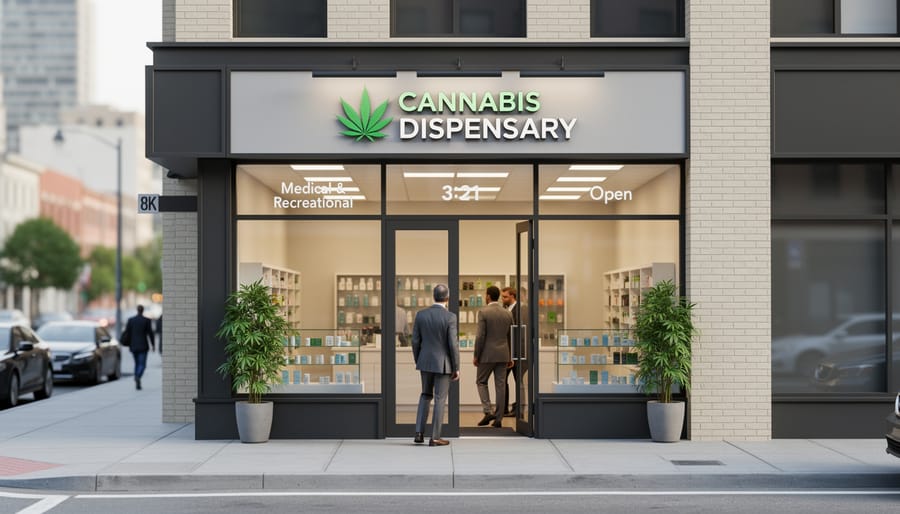
General liability insurance protects cannabis dispensaries against claims from customers, visitors, or neighboring businesses for bodily injury, property damage, or personal injury occurring on your premises. This coverage responds when a customer slips on a wet floor, is injured by falling merchandise, or suffers an adverse reaction to a product consumed on-site (where provincial regulations allow).
Typical policies offer $1 million to $2 million per occurrence, with aggregate limits of $2 million to $5 million annually. Coverage includes legal defense costs, settlements, and judgments within policy limits. Most policies extend to claims of slander, libel, or advertising injury, which matters when dispensaries make product claims or navigate complex medical access rules in their marketing.
Standard exclusions apply: intentional acts, pollution, professional services, and employee injuries (covered under workers’ compensation). Cannabis-specific exclusions often include claims arising from intoxication, driving under the influence after purchase, or federal enforcement actions.
This coverage is foundational because it addresses the everyday risks inherent to retail operations. Without it, a single slip-and-fall claim could bankrupt your business, and many commercial lease agreements and licensing authorities require proof of general liability coverage before you can operate.
Product Liability Insurance
Product liability insurance shields your dispensary from lawsuits alleging that cannabis products sold in your store caused harm to consumers. This coverage addresses contamination issues (mold, pesticides, heavy metals), incorrect labeling of THC/CBD potency, allergic reactions, and adverse health effects customers attribute to your products.
Even when manufacturers and licensed producers conduct mandatory Health Canada testing, gaps exist. Products may pass initial inspection but deteriorate during storage or transport. Mislabeling errors occur. Customers may blame your store for conditions unrelated to your products, yet defending these claims costs thousands in legal fees alone.
Your policy responds when customers file suit claiming illness, injury, or property damage from products you sold. Coverage typically includes defense costs, settlements, and judgments within policy limits. Standard limits range from $2 million to $5 million per occurrence.
Critical protection extends throughout the supply chain. If a producer’s contaminated batch reaches your shelves, both you and the manufacturer face liability. Your policy defends your interests separately from the supplier’s, covering your portion of damages and legal costs.
Document supplier licenses, certificates of analysis, and chain-of-custody records for every product. These records prove due diligence if claims arise. Review supplier insurance requirements in your purchasing agreements, ensuring producers carry adequate coverage that names your dispensary as an additional insured where possible.
Property and Contents Insurance
Property and contents insurance protects your dispensary’s physical assets from damage or loss. This coverage typically encompasses the building structure (if you own it), cannabis inventory, point-of-sale systems, display cases, safes, security equipment, and interior fixtures. Standard perils include fire, lightning, windstorm, vandalism, water damage, and burst pipes.
Cannabis retailers face unique valuation challenges that complicate claims. Your inventory fluctuates constantly as fresh product arrives and sells, making accurate documentation critical. Insurers often require detailed inventory tracking systems that record product batch numbers, quantities, and wholesale costs. Because cannabis can’t simply be replaced from standard suppliers during a claim, expect extended replacement timeframes that business interruption coverage should account for.
Premium rates directly reflect your security infrastructure. Dispensaries with monitored alarm systems, surveillance cameras with cloud backup, reinforced safes, and limited access controls qualify for lower rates. Many insurers mandate minimum security standards before issuing coverage, and upgrading systems beyond requirements can reduce premiums by fifteen to thirty percent. Document all security investments thoroughly when applying for coverage or renewals.
Crime and Theft Insurance
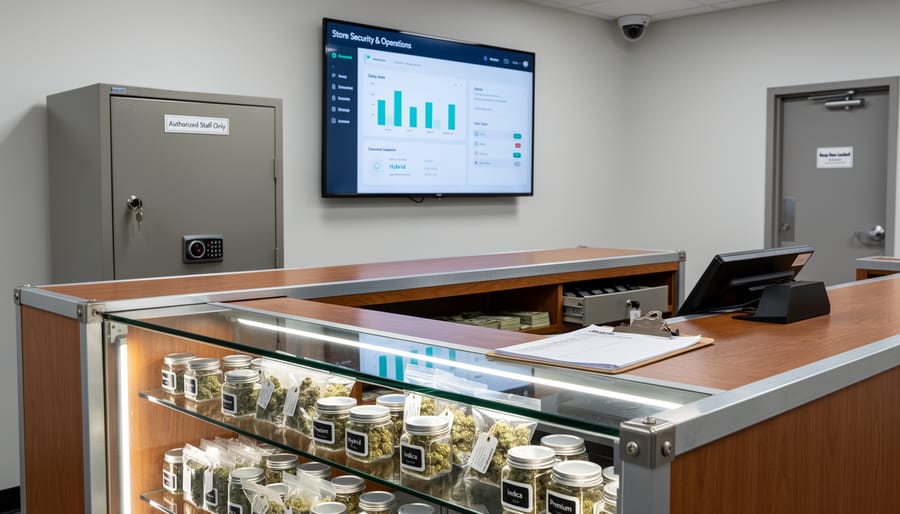
Crime and theft insurance addresses one of the most pressing vulnerabilities in cannabis retail: the concentration of cash and high-value inventory under one roof. Because federal banking restrictions limit electronic payment options at many dispensaries, businesses often handle substantial amounts of cash daily. This creates exposure to internal theft by employees, external robbery attempts, and sophisticated burglary operations targeting cannabis products with significant street value.
This specialized coverage typically protects against employee dishonesty, forcible entry, holdup during business hours, and safe burglary. It covers both cash losses and stolen inventory, with policies often extending to include forgery, computer fraud, and funds transfer fraud. Given that a single robbery can result in losses exceeding $50,000 when product and cash are combined, adequate limits are essential.
Coverage complements, but doesn’t replace, physical security measures like surveillance systems, safes, and alarm monitoring. Insurers typically require proof of such safeguards before issuing policies, and many offer premium discounts when dispensaries exceed minimum security standards. The policy responds when security measures fail, covering losses that would otherwise devastate cash flow and deplete working capital needed for inventory replenishment and payroll.
Cyber Liability Insurance
Cannabis dispensaries collect sensitive customer data through loyalty programs, online ordering systems, and point-of-sale transactions. A single data breach can expose names, addresses, purchase histories, and payment information, triggering mandatory notification requirements under federal and provincial privacy laws.
Cyber liability insurance covers the costs of breach response, including forensic investigations, legal fees, customer notifications, credit monitoring services, and regulatory fines. It also protects against business interruption when ransomware locks your POS system or hackers disable online ordering platforms.
Retailers face escalating threats in 2026. Criminals target cannabis businesses because they process high transaction volumes and often lack enterprise-grade security infrastructure. Your policy should cover both first-party losses (data recovery, system restoration) and third-party claims (customer lawsuits, regulatory penalties).
Most insurers require basic cybersecurity measures as a condition of coverage: encrypted payment processing, regular software updates, employee training on phishing recognition, and secure Wi-Fi networks. Premiums typically reflect your digital footprint size and the volume of personal information you collect and store.
Employment Practices Liability Insurance
Employment practices liability insurance (EPLI) shields dispensary owners from lawsuits alleging wrongful termination, discrimination, harassment, wage disputes, and retaliation. As cannabis retail creates substantial employment opportunities across Canada, with dispensaries often staffing 10-20 employees across multiple shifts, the risk of workplace claims increases proportionally.
EPLI covers legal defense costs, settlements, and judgments when employees or job applicants file claims. Coverage typically extends to management decisions, workplace policies, and hiring practices. This protection matters particularly in cannabis retail because the industry attracts diverse workforces navigating rapidly evolving workplace standards and provincial employment legislation.
Premiums reflect your employee count, documented HR policies, and claims history. Most insurers require written employee handbooks, anti-discrimination policies, and termination procedures before issuing coverage. Policies typically range from $25,000 to $1 million in coverage limits, with annual premiums starting around $1,200 for smaller operations.
EPLI protects both your business assets and demonstrates commitment to fair employment practices, essential for building legitimate operations in Canada’s regulated cannabis sector.
Business Interruption Insurance
Business interruption insurance replaces lost income when your dispensary can’t operate due to a covered event. If fire damages your retail space, a burst pipe floods your inventory room, or a power outage spoils temperature-sensitive products, this coverage pays for the revenue you would have earned during the closure.
The policy typically covers fixed expenses that continue even when you’re shut down, rent, loan payments, employee wages, and utilities. It also reimburses extra costs incurred to minimize the interruption, such as renting temporary space or expediting equipment repairs. Without this coverage, you’re paying ongoing expenses from savings while generating zero sales, which quickly depletes reserves.
For cannabis retailers, calculating appropriate coverage requires accurate sales projections and realistic recovery timelines. Factor in how long it would take to replace specialized security systems, pass reinspection, and restock inventory from licensed suppliers. Most policies require you to maintain operations within a specified period to qualify, so don’t delay reopening.
Compliance Requirements and Insurance Obligations

Cannabis retailers across Canada must maintain specific insurance coverage to secure and retain their operating licenses. These requirements form a critical component of dispensary compliance and failure to meet them carries serious consequences that can threaten business viability.
Provincial and territorial regulators mandate minimum insurance thresholds as a condition of licensing, though the specific requirements vary significantly by jurisdiction. Most provinces require general liability coverage ranging from $2 million to $5 million, with some mandating additional product liability or property insurance as separate policy requirements.
| Jurisdiction | Required Coverage Types | Minimum Liability Amount |
|---|---|---|
| Ontario | General Liability, Product Liability | $2 million per occurrence |
| British Columbia | General Liability, Property | $3 million aggregate |
| Alberta | General Liability, Crime Insurance | $2 million per occurrence |
| Quebec | General Liability, Product Liability | $5 million aggregate |
Licensing applications typically require proof of insurance before approval, and retailers must maintain continuous coverage throughout their operating period. Regulators conduct periodic compliance reviews and can request updated certificates of insurance at any time. Lapses in coverage trigger immediate regulatory action.
The consequences of operating without adequate insurance are severe and multi-layered. Regulators can impose fines ranging from $10,000 to $50,000 for non-compliance, suspend licenses pending proof of coverage, or revoke licenses entirely for repeated violations. Beyond regulatory penalties, uninsured retailers face direct legal liability for any incidents, potentially resulting in personal asset seizure and bankruptcy if claims exceed available resources.
License suspension typically occurs within 30 days of a coverage lapse notification, forcing immediate business closure until compliance is restored. This creates a cascading effect: lost revenue, employee layoffs, inventory spoilage, and reputational damage that may prevent future licensing even after insurance is secured. Some provinces also require retailers to notify the regulator within 48 hours of any policy cancellation or material change, creating additional administrative obligations that demand careful tracking.
How to Obtain Cannabis Dispensary Insurance
Securing insurance for your cannabis dispensary requires a methodical approach because traditional insurers often exclude cannabis businesses from standard commercial policies. Start by identifying brokers and insurers who specialize in cannabis coverage, these professionals understand the industry’s unique risks and maintain relationships with underwriters willing to cover cannabis operations.
Research specialized cannabis insurance brokers through industry associations, provincial cannabis retail organizations, and peer recommendations from other dispensary owners. Schedule consultations with at least three brokers to compare their expertise, available carriers, and service approach. Ask about their experience with cannabis clients, claims support, and whether they offer bundled policies that can reduce overall costs.
Prepare comprehensive documentation before requesting quotes. Insurers will want to review your business plan, security protocols, inventory management systems, employee training programs, and operational procedures. Gather your license application materials, provincial retail authorization, facility layouts, security system specifications, and financial projections. Document your product sourcing relationships with licensed producers, quality control measures, and any certifications your business holds.
Be transparent about your operations during the underwriting process. Insurers assess risk based on factors like location, security measures, cash handling procedures, delivery services, and claims history. Concealing information or misrepresenting operations can void coverage when you need it most.
Compare quotes on more than just premium cost. Evaluate coverage limits, deductibles, exclusions, and policy terms carefully. A cheaper policy with restrictive exclusions or insufficient limits provides false economy. Pay particular attention to coverage for inventory in transit, product recall expenses, and business interruption waiting periods.
Consider timing your insurance purchase strategically. Obtain quotes well before your license renewal date or before you need to demonstrate coverage for regulatory purposes. Rushed applications often result in higher premiums or less favorable terms.
Work with your chosen broker to finalize the policy, ensuring all endorsements and coverage extensions are clearly documented. Request certificates of insurance for your landlord, licensing authority, and any business partners who require proof of coverage. Schedule an annual policy review to adjust coverage as your business grows and your risk profile evolves.
Common Coverage Gaps and How to Address Them
Transportation and delivery operations expose many cannabis retailers to significant uninsured losses. Standard commercial vehicle policies often exclude cannabis products entirely, leaving you vulnerable during transfers between suppliers and your store, or when making customer deliveries. Even if your general liability covers on-premise incidents, coverage typically ends the moment products leave your property. Secure specialized cannabis transit insurance that provides all-risk coverage for goods in motion, including protection against theft, accident damage, and hijacking. Review your certificates annually to confirm coverage extends to third-party couriers if you outsource delivery.
Inventory valuation presents another frequent gap. Many policies cap contents coverage at fixed limits established when you opened, but seasonal demand shifts and bulk purchasing can push your actual inventory value far higher. A fire during peak holiday stock could leave you with a six-figure underinsured claim. Conduct quarterly inventory audits and adjust your coverage limits accordingly, documenting actual stock values through your point-of-sale system records. Consider blanket inventory coverage that automatically adjusts within a predetermined range rather than requiring constant policy amendments.
Product recall exclusions catch retailers off guard. While your product liability policy covers customer harm, it may exclude the costs of voluntarily recalling contaminated or mislabeled products before anyone reports illness. Given strict testing requirements and occasional supplier issues affecting medical eligibility products, recall expenses can mount quickly. Purchase specific recall expense coverage that reimburses notification costs, product retrieval, disposal fees, and lost revenue during the recall period.
Social media liability represents an emerging exposure most standard policies ignore. Customer complaints, defamation claims, or privacy violations stemming from online interactions can trigger costly lawsuits your general liability won’t cover. Ensure your cyber liability policy explicitly includes social media coverage, protecting against both first-party and third-party digital claims.
Frequently Asked Questions About Cannabis Dispensary Insurance
How much does insurance for a cannabis dispensary typically cost?
Annual premiums range from $5,000 to $25,000 depending on location, inventory value, security measures, and coverage limits. Smaller operations with robust security systems generally pay less, while high-traffic urban dispensaries with extensive inventory face higher costs.
Do I need separate insurance if I’m operating a home-based cannabis retail business?
Yes. Standard homeowner’s policies exclude cannabis-related business activities, and operating without proper commercial coverage leaves you personally liable for claims. You’ll need a specialized cannabis business policy that covers inventory, liability, and operations. That need for specialised commercial cover is central to insuring cannabis businesses for Canadian retailers.
What should I do if traditional insurance companies decline my application?
Work with a broker specializing in cannabis insurance who maintains relationships with carriers underwriting cannabis risks. These specialized brokers can access markets unavailable to general agents and help you prepare applications that address underwriter concerns.
When do I need to secure insurance during the licensing process?
Most provinces require proof of insurance before issuing or renewing a retail license. Contact specialized insurers early in your application process, as obtaining quotes and finalizing coverage can take several weeks.
Are product recalls covered under standard cannabis dispensary policies?
Product recall coverage is typically excluded from general liability policies and requires a separate endorsement or standalone policy. This coverage handles notification costs, product retrieval, and disposal when contamination or regulatory issues arise.
How can I reduce my insurance premiums?
Install comprehensive security systems including cameras and alarm monitoring, implement strict inventory controls, maintain detailed employee training records, and work with licensed suppliers who carry their own insurance. Bundling multiple policies with one carrier often yields discounts.
What’s typically excluded from cannabis dispensary insurance policies?
Common exclusions include federal law violations, intentional criminal acts, pollution from grow operations (if applicable), unlicensed activities, and transportation without proper endorsements. Review your policy carefully to understand what situations void coverage.
Beyond these frequently asked questions, retailers often encounter confusion around claim processes. When filing a claim, document everything immediately with photos, police reports if theft or vandalism occurred, and detailed inventory records. Contact your insurer within 24 hours of discovering a loss. The claim process typically involves an adjuster inspection, proof of loss documentation, and review of security footage if relevant. Delays in reporting or incomplete documentation can result in claim denials or reduced payouts.
Coverage availability continues to expand as the cannabis retail sector matures. More insurers entered the market between 2023 and 2026, improving competition and pricing. However, coverage remains more expensive than equivalent policies for traditional retail operations due to perceived risks and regulatory complexity. Shop around annually, as new entrants and improved loss histories in the industry create opportunities for better rates. Maintaining a claims-free record substantially improves your renewal terms and demonstrates operational competence to underwriters evaluating your risk profile.
Securing comprehensive insurance coverage stands as both a legal obligation and a fundamental business protection strategy for cannabis dispensaries operating across Canada in 2026. The unique risk profile of cannabis retail, spanning product liability, cash handling, cyber threats, and evolving regulatory frameworks, demands specialized coverage that standard business policies simply cannot provide.
Working with brokers who understand the cannabis sector ensures you obtain policies that address industry-specific exposures while meeting provincial licensing requirements. Review your coverage annually as your business grows, inventory values change, and new risks emerge. Policy gaps that seem minor today can become catastrophic financial burdens when claims arise.
Maintaining robust insurance demonstrates your commitment to professional operations and safety standards, strengthening your business reputation within the legitimate cannabis market. It protects your investment in inventory, equipment, and premises while safeguarding the employment opportunities you create for your team. Beyond regulatory compliance, comprehensive coverage provides the financial stability needed to recover from unexpected events without jeopardizing your license or business continuity.
The cannabis retail landscape continues maturing, and adequate insurance remains foundational to sustainable operations. Prioritize protection now rather than addressing coverage gaps after a claim arises.