
 jane
Building a legitimate cannabis industry in Canada requires more than market opportunity and capital. It demands rigorous compliance frameworks, professional operational standards, and a demonstrated commitment to public safety that transforms entrepreneurial vision into sustainable enterprise.
Since federal legalization, the cannabis sector has matured from a nascent market into a significant economic driver, generating thousands of jobs and billions in annual revenue. Yet success in this space hinges on understanding that regulatory adherence isn’t a barrier to growth. It’s the foundation. Retailers and entrepreneurs who treat licensing requirements, product testing protocols, and consumer protection measures as core business functions consistently outperform competitors who view compliance as an afterthought.
The pathway to industry integrity starts with recognizing that cannabis retail operates under heightened scrutiny. Provincial regulators, municipal authorities, and federal oversight bodies maintain active enforcement programs designed to protect public health while ensuring fair market competition. This regulatory environment creates distinct advantages for operators who invest early in proper systems, from seed-to-sale tracking and staff training to robust inventory controls and transparent record-keeping.
For policymakers and business leaders alike, the challenge lies in balancing commercial viability with social responsibility. Communities want access to legal cannabis products, but they also expect retailers to prevent diversion to minors, support harm reduction initiatives, and contribute positively to local economies through quality employment. Meeting these expectations requires more than checking boxes. It requires embedding professional standards into every aspect of operations, from hiring practices and workplace safety to customer education and community engagement.
The following framework provides practical guidance for building and maintaining a cannabis business that meets regulatory requirements while creating lasting value.
What Industry Development Means for Cannabis Retailers
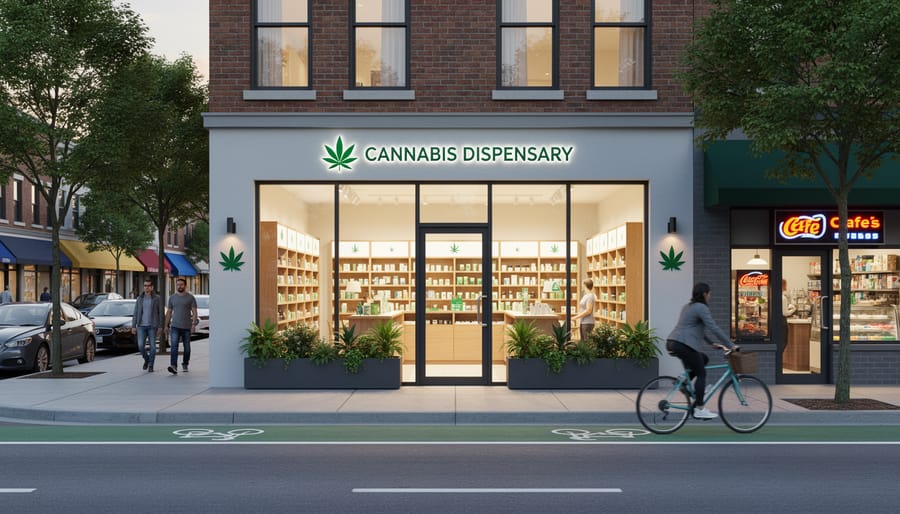
Industry development in the cannabis sector means building the foundational systems that allow retailers to operate sustainably while meeting diverse consumer needs. For cannabis retailers, this goes far beyond opening more stores or chasing short-term sales figures.
At its core, development involves creating robust infrastructure that supports reliable operations. This includes establishing relationships with licensed producers who consistently deliver quality products, implementing inventory management systems that ensure compliance tracking, and developing security protocols that meet regulatory standards while protecting staff and customers. Retailers need point-of-sale systems that handle complex compliance reporting, storage facilities that maintain product integrity, and supply chains that prevent shortages without encouraging overstock.
Professional standards form another pillar of true industry development. Cannabis retail requires specialized knowledge that traditional retail training doesn’t cover. Staff must understand cannabinoid profiles, consumption methods, dosage guidance, and how to have informed conversations with both recreational users and patients seeking access to medical cannabis. Developing these competencies across the workforce elevates the entire industry’s credibility.
Workforce development extends beyond basic product knowledge. The cannabis industry creates career pathways in retail management, compliance coordination, customer education, and operations oversight. Retailers investing in employee training and advancement opportunities build institutional knowledge that strengthens their businesses while contributing to a more professional sector overall.
Sustainable business models recognize that cannabis retail must serve multiple consumer segments effectively. Recreational customers seek convenience, variety, and knowledgeable service. Medical consumers need consistent access to specific products, dosage precision, and staff who understand therapeutic applications. Retailers who design operations accommodating both groups without compromising either experience contribute to a mature, resilient industry that can weather regulatory changes and market fluctuations. Development means building businesses positioned for decades, not just the next quarter.
The Integrity Challenge: Why Standards Matter

Preventing Underage Access

Cannabis retailers operate under some of the strictest age verification requirements in any retail sector. Every person entering a store must prove they’re 19 or older, with staff trained to check government-issued photo ID, even for customers who appear well above legal age. This zero-tolerance approach protects both consumers and the industry’s social license to operate.
Effective verification starts at the door, not at the point of sale. Most retailers implement a two-check system: one verification at entry and another at the transaction. Staff must examine ID features that confirm authenticity, holograms, microprinting, and security features that vary by province. Training programs teach employees to spot fake IDs and handle situations where identification appears altered or borrowed.
Technology reinforces human judgment without replacing it. ID scanning systems capture customer age and flag expired documents, but staff remain the first line of defense. Some retailers use software that logs each verification, creating an audit trail that demonstrates compliance during regulatory inspections. These systems also prevent accidental sales when multiple staff members handle a transaction.
Training extends beyond mechanical ID checking to include judgment calls. Staff learn to recognize attempts at circumvention, groups where one legal adult tries to purchase for underage friends, or customers who become aggressive when denied. Role-playing scenarios prepare employees for confrontational situations while maintaining the composure needed to enforce age restrictions consistently.
Compliance isn’t optional. Provincial regulators conduct mystery shops and sting operations using young-looking adults. A single failed verification can trigger fines exceeding $10,000 and license suspension. Retailers who treat age verification as a cultural priority rather than a checkbox requirement build teams that understand their role in keeping cannabis out of youth hands.
Combating the Illicit Market
Legitimate cannabis retailers serve as the front line in displacing organized crime from the cannabis market. Every customer who chooses a legal store over an illicit source represents a direct hit to criminal networks that once dominated this multi-billion-dollar industry.
Price competitiveness remains crucial. While legal retailers can’t always match the rock-bottom prices of unregulated sellers who avoid taxes and testing costs, narrowing the gap makes legality the obvious choice for most consumers. Strategic pricing on popular products, loyalty programs, and transparent value propositions help demonstrate that the legal premium delivers genuine benefits worth paying for.
Quality assurance provides the strongest competitive advantage. Legal cannabis undergoes mandatory testing for potency, contaminants, pesticides, and microbial impurities. Retailers who educate customers about these protections highlight what illicit sellers can’t offer: guaranteed product safety and consistent cannabinoid profiles. Displaying certificates of analysis and explaining testing protocols turns compliance into a selling point.
Consumer education accelerates market transition. Many Canadians still don’t understand the risks of illicit cannabis beyond legal consequences. Staff trained to discuss contamination risks, the absence of product liability in illegal channels, and how legal purchases support legitimate jobs rather than criminal enterprises give customers compelling reasons to change their buying habits.
The math is straightforward: as legal market share grows, organized crime’s revenue shrinks. Retailers who combine competitive pricing with superior quality and informed customer service don’t just build their own businesses. They actively dismantle the criminal infrastructure that thrived under prohibition.
Employment Growth Through Responsible Development

Canada’s legal cannabis sector has evolved into a significant employment engine, creating thousands of positions across multiple skill levels and disciplines. Unlike the illicit market it replaces, the regulated industry offers legitimate career paths with benefits, training opportunities, and genuine advancement potential.
The employment landscape extends far beyond retail storefronts. While budtenders and store managers represent the most visible positions, the sector’s backbone includes quality assurance technicians who test products for safety, compliance officers who navigate evolving regulations, inventory specialists who manage supply chains, and security professionals who protect facilities and transport. Each role demands specific knowledge and offers distinct career trajectories.
| Job Category | Typical Entry Requirements | Growth Potential |
|---|---|---|
| Retail Staff | High school diploma, cannabis training certification | Store management, regional operations |
| Compliance Specialists | Post-secondary education, regulatory knowledge | Director-level compliance, consulting |
| Supply Chain Roles | Logistics experience, inventory management skills | Operations management, procurement leadership |
| Quality Assurance | Science background, testing certification | Lab management, technical leadership |
Responsible industry development directly correlates with job quality. Retailers who invest in comprehensive staff training, competitive compensation, and clear advancement frameworks build teams capable of navigating complex medical access rules answering sophisticated product questions, and maintaining the operational excellence that distinguishes legal retailers from illicit operators.
Training pathways have matured considerably. Many provinces now offer cannabis retail certification programs, while colleges provide specialized diplomas covering everything from cultivation science to regulatory affairs. Retailers benefit when employees pursue these credentials, as educated staff reduce compliance risks and enhance customer service.
The sector also generates substantial indirect employment. Legal firms specializing in cannabis law, marketing agencies navigating advertising restrictions, technology providers building inventory tracking systems, and financial services navigating banking complexities all derive revenue from a thriving, compliant industry. When retailers succeed through ethical practices, they create ripple effects throughout their local economies, supporting jobs that simply wouldn’t exist in an illicit marketplace.
Legal Compliance as a Competitive Advantage
Legal compliance isn’t just about avoiding fines, it’s a strategic differentiator that sets successful cannabis retailers apart in an increasingly competitive market. When you exceed minimum regulatory requirements, you’re building an asset that compounds over time: customer loyalty rooted in trust.
Consumers can’t easily verify product quality or business legitimacy themselves. They rely on visible compliance signals. A retail operation with transparent testing protocols, meticulous record-keeping, and staff who confidently explain regulations communicates professionalism that illegal operators can never replicate. This matters particularly for medical consumers seeking no medical card required access, they’re often health-conscious buyers who scrutinize retailer credibility closely.
The financial case strengthens further when you consider penalty avoidance. A single compliance violation can trigger fines ranging from $5,000 to $250,000, plus license suspension or revocation. These aren’t abstract risks. Regulators conduct unannounced inspections, and enforcement has intensified as the industry matures. Retailers who view compliance as baseline protection rather than unnecessary expense avoid these catastrophic costs entirely.
Beyond risk mitigation, compliance excellence opens doors. Municipal governments considering additional retail licenses favor operators with clean records. Investors and partners conducting due diligence eliminate non-compliant businesses immediately. Banks and insurers, notoriously cautious about cannabis, offer better terms to retailers demonstrating regulatory sophistication.
The long-term positioning advantage becomes clearest as markets mature. Early-stage cannabis retail competed primarily on price and convenience. As the industry stabilizes, differentiation shifts toward brand reputation and reliability. Retailers who embedded compliance into their culture from day one don’t need to retrofit operations later, they’re already positioned as the trustworthy choice when regulatory standards inevitably tighten and consumer expectations rise.
Compliance isn’t overhead. It’s infrastructure for sustainable growth.
Building Industry Standards That Work for Everyone
Effective industry standards emerge from collaboration, not top-down mandates. The Canadian cannabis sector demonstrates that workable standards require input from retailers operating storefront dispensaries, producers navigating provincial regulations, compliance specialists interpreting requirements, and consumer advocates representing public interests. This multi-stakeholder approach creates standards that address real operational challenges rather than theoretical ideals.
The balance between protection and practicality defines successful standard-setting. Overly restrictive standards drive up costs for small retailers without corresponding safety benefits, while lax requirements undermine public trust. A 2023 retail association survey found that 67% of independent operators struggled with standards designed for large corporate chains, highlighting the need for scalable requirements that achieve safety goals without forcing consolidation.
Size-appropriate standards recognize operational differences. A single-location retailer in a rural community faces different inventory management realities than a multi-store urban chain, yet both must meet the same consumer protection objectives. Tiered compliance frameworks allow smaller operators to demonstrate safety through methods matching their scale while maintaining consistent outcomes across the industry.
Ongoing dialogue prevents standards from becoming outdated. Regular review sessions with retail participants identify unintended consequences, technological advances that enable better compliance methods, and emerging risks requiring new protocols. This iterative process ensures retailer compliance remains achievable even as market conditions evolve.
Industry associations play a crucial bridging role, translating regulatory language into operational guidance and communicating practical implementation challenges back to policymakers. This bidirectional communication creates standards that protect consumers while keeping legal retail commercially viable against illicit competition.
Safety Standards in Practice
Safety standards in retail cannabis go beyond checking boxes on a compliance form. They require integrated systems that protect staff, inform customers, and maintain product integrity from delivery to purchase. Retailers who treat safety as operational DNA rather than regulatory burden create environments where both employees and consumers feel confident.
Product testing forms the foundation. Every cannabis product sold legally in Canada must pass standardized testing for potency, pesticides, microbial contaminants, and heavy metals before reaching shelves. Retailers should verify certificates of analysis for each product batch, understand the testing parameters, and be prepared to explain results to customers who ask. When products are recalled, immediate removal and customer notification protocols must activate without delay.
Storage protocols directly impact product safety and quality. Cannabis requires controlled environments, temperature-stable, low-humidity spaces protected from direct light. Separate medical and recreational inventory when applicable, maintain strict access controls to prevent diversion, and implement first-in-first-out rotation to ensure freshness. Security measures that prevent theft also prevent products from entering illicit channels.
Establishing comprehensive safety protocols requires methodical implementation:
- Conduct a full operational safety audit covering product handling, storage conditions, security systems, and emergency procedures
- Develop written standard operating procedures for every safety-critical process, from receiving shipments to handling customer complaints
- Train all staff on safety protocols before they interact with products or customers, with quarterly refresher sessions
- Install physical safeguards including proper storage equipment, security cameras, and access control systems
- Create incident reporting and response procedures that staff can execute immediately when safety concerns arise
- Schedule regular safety reviews with staff input to identify gaps and continuously improve protocols
Staff safety training extends beyond product knowledge. Employees need training in conflict de-escalation, recognizing signs of impairment or intoxication, emergency response procedures, and proper handling of cannabis concentrates and edibles. Create a culture where staff feel empowered to refuse sales when safety concerns arise.
Customer education initiatives close the safety loop. Clear signage about responsible consumption, storage away from children and pets, and impaired driving risks should be visible throughout the store. Staff trained in medical customer education can guide consumers toward appropriate products and dosages, reducing adverse experiences that undermine industry credibility. When customers understand how to use products safely, they become advocates for the legal market rather than cautionary tales that fuel regulatory backlash.
How Retailers Can Participate in Industry Development
Cannabis retailers shape the industry’s future through their daily choices and active participation in collective advancement. Moving beyond compliance alone, forward-thinking operators contribute to building a stronger sector that benefits everyone.
Join industry associations and advocacy groups that represent retailer interests at provincial and federal levels. These organizations amplify individual voices in policy discussions, provide regulatory updates, and create forums for addressing common challenges. Active membership means attending meetings, participating in committees, and sharing operational insights that inform advocacy positions.
Share knowledge generously with fellow retailers, especially those new to the sector. Mentor emerging operators by explaining effective compliance systems, efficient inventory management, and customer service approaches that build trust. This knowledge transfer strengthens the entire industry by raising operational standards across all businesses, regardless of size or location.
Engage directly with policymakers and regulators through consultation processes, public comment periods, and stakeholder meetings. Retailers bring frontline perspective that officials need when crafting regulations. Present specific examples from your operations, highlight unintended consequences of proposed rules, and suggest practical alternatives that maintain safety while supporting business viability.
Participate in local community initiatives that demonstrate the cannabis industry’s positive impact. Sponsor youth programs, support public health campaigns, and partner with community organizations on harm reduction efforts. These actions build public trust and counter negative perceptions.
Document and share best practices through case studies, presentations at industry events, and contributions to trade publications. When you solve a challenge, whether it’s age verification, staff training, or customer education, your solution can help dozens of other retailers improve their operations.
Commit time to industry working groups developing voluntary standards, training programs, or certification systems. These collaborative efforts create frameworks that professionalize the sector and establish benchmarks exceeding minimum regulatory requirements.
The cannabis industry stands at a pivotal moment where commercial success and ethical practice must advance together, not in opposition. Retailers who embrace integrity standards while pursuing growth understand a fundamental truth: sustainable prosperity comes from serving communities well, not just serving them quickly.
Every retailer who invests in staff training, maintains rigorous compliance, and educates consumers contributes to an industry worth defending. These daily commitments create the stable employment opportunities that families depend on and the public trust that protects the entire sector from regulatory reversal. When retailers prioritize safety and transparency, they build competitive advantages that no illicit operator can match.
The work of industry development requires participation from businesses of all sizes. Share your operational insights with newer entrants. Engage with industry associations working on practical standards. Communicate with policymakers about regulations that affect your ability to operate responsibly. Your frontline experience shapes better frameworks for everyone.
Communities across Canada are watching to see whether legal cannabis delivers on its promises. The retailers who succeed long-term will be those who recognize that their business interests align with community wellbeing. Strong integrity standards create the foundation for expansion, innovation, and career pathways that transform jobs into professions.
The choice is straightforward: participate in building an industry that earns its place in Canadian commerce, or risk being swept aside by retailers who do. The competitive advantage now belongs to those who operate with principle.